Text: Solveig Hansen, 2022
July 21 marks Ernest Hemingway’s birthday — a fitting moment to revisit the writing rules that shaped his unmistakable style, starting at a newspaper desk in Kansas City.
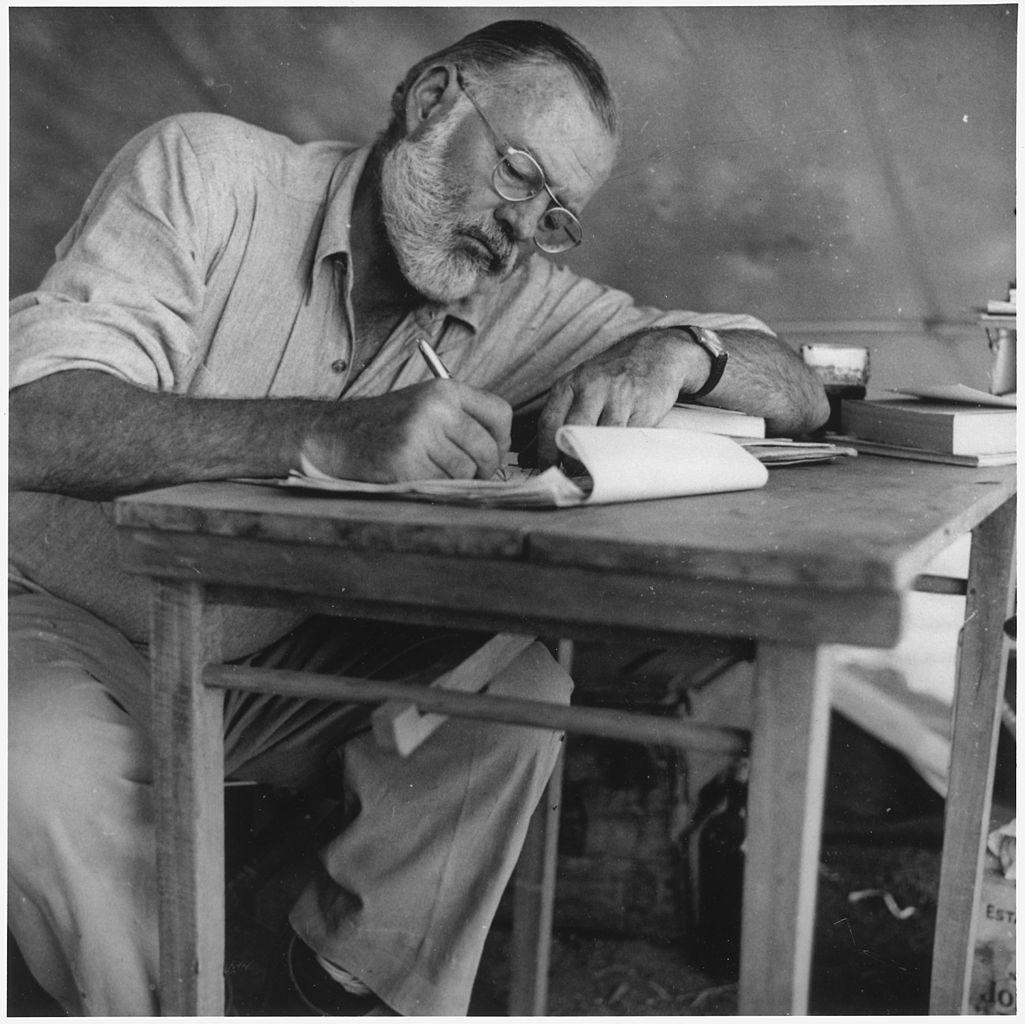
At 17, with the Great War still raging in 1917, Hemingway was too young to enlist — so he went to work for The Kansas City Star newspaper. The Star, praised in Ken Burns’ documentary on Hemingway, was known for its “crisp, clear and immediate reporting.” Their copy style sheet set the tone.
- “Use short sentences. Use short first paragraphs. Use vigorous English. Be positive, not negative.”
These were some of the rules in the Star‘s style sheet during Hemingway’s six-month stint as a cub reporter in 1917–18, before he volunteered as a Red Cross ambulance driver in Italy. He later called them “the best rules I ever learned in the business of writing.”
“He took what the Star gave him, and he gave back a vivid, forceful, economical writing that today we call the Hemingway style,” former Kansas City Star editor Mark Zieman said. C.G. “Pete” Wellington, the assistant city editor, “pushed Hemingway to adopt a cleaner, more forceful prose style and to look for telling detail.”
“Get to the point” is one of the hallmarks of Hemingway’s style. His opening lines quickly set the scene and pull the reader in, like these:
- “It was now lunch time and they were all sitting under the double green fly of the dining tent pretending that nothing had happened.” The Short Happy Life of Francis Macomber
It’s clear that something has happened.
- “He was an old man who fished alone in a skiff in the Gulf Stream and he had gone eighty-four days now without taking a fish.” The Old Man and the Sea
The old man goes out and catches a big fish. It’s a long fight. The sharks eat it on the way back ashore. What beat me out there, he wonders. “Nothing,” he concludes, “I went out too far.”
This economy of language became central to Hemingway’s approach. He later described it as the iceberg theory:
“If a writer of prose knows enough about what he is writing about, he may omit things that he knows and the reader… will have a feeling of those things as strongly as though the writer had stated them.”
Most of the story, like most of an iceberg, is hidden beneath the surface — only the essentials remain visible.
“I write one page of masterpiece to ninety one pages of shit. I try to put the shit in the wastebasket.”
— Ernest Hemingway in a letter to F. Scott Fitzgerald
His commitment to craft paid off: When Hemingway received the Nobel Prize in literature in 1954, the committee praised his “mastery of the art of narrative” and his influence on contemporary style of writing.
Hemingway’s Nobel acceptance speech (read full text):
In his Nobel acceptance speech, Hemingway reflected on the elusive nature of great writing:
“For a true writer each book should be a new beginning where he tries again for something that is beyond attainment. He should always try for something that has never been done or that others have tried and failed. Then sometimes, with great luck, he will succeed.”
Back to the style sheet and the rules. Language evolves. Some words fade out, while new ones come in:
- “Motor car is preferred but automobile is not incorrect.”
Some rules still hold — for instance those on slang and adjectives:
- “Never use old slang. [Slang words] have no place after their use becomes common. Slang to be enjoyable must be fresh.”
- “Avoid the use of adjectives, especially such extravagant ones as splendid, gorgeous, grand, magnificent, etc.”
And always, be precise:
- “Say, ‘She was born in Ireland and came to Jackson County in 1874’ not ‘but came to Jackson County.’ She didn’t come here to make amends for being born in Ireland. This is common abuse of the conjunction.”
- “Don’t say ‘He had his leg cut off in an accident.’ He wouldn’t have had it done for anything.”
- “He died of heart disease, not heart failure — everybody dies of heart failure.”
Today, a century later, some of the Star‘s rules still ring true — clean, direct, and built to last. The same qualities Hemingway carried into his work.
Read all the original rules here.
See also:
Writers on writing — including Stephen King, who credits a newspaper editor for teaching him, as a high school student, more about writing in ten minutes than he ever learned in his literature classes. Much like Hemingway, King learned from early hands-on guidance.
Image: SamHolt6, CC BY-SA 4.0, via Wikimedia Commons
 Z for short.

