Text: Solveig Hansen, 2025
The world’s first photograph. The first photograph to feature a person. The first self-portrait. Every beginning has a story.
August 19 marks World Photography Day. Let’s rewind to photography’s infancy — from a hazy view through a French window, to the first person accidentally captured on film, to the world’s first “selfie” and color photographs. We then jump to 1997, when the very first mobile photo was taken, and finish in the present day with an AI-generated look at the origins of it all.
Before photography: the darkroom without film
Before anyone knew how to fix an image, people had already discovered how to capture it — even if only for a brief moment. For centuries, artists and scientists experimented with the camera obscura — a simple box or darkened room with a small hole that projected a mirrored image of the outside world onto the opposite wall.
This optical trick was used as a drawing aid, but without a method to preserve the image, it remained a fleeting reflection — until one man in France decided to change that.
The world’s first photograph: a view and eight hours of patience
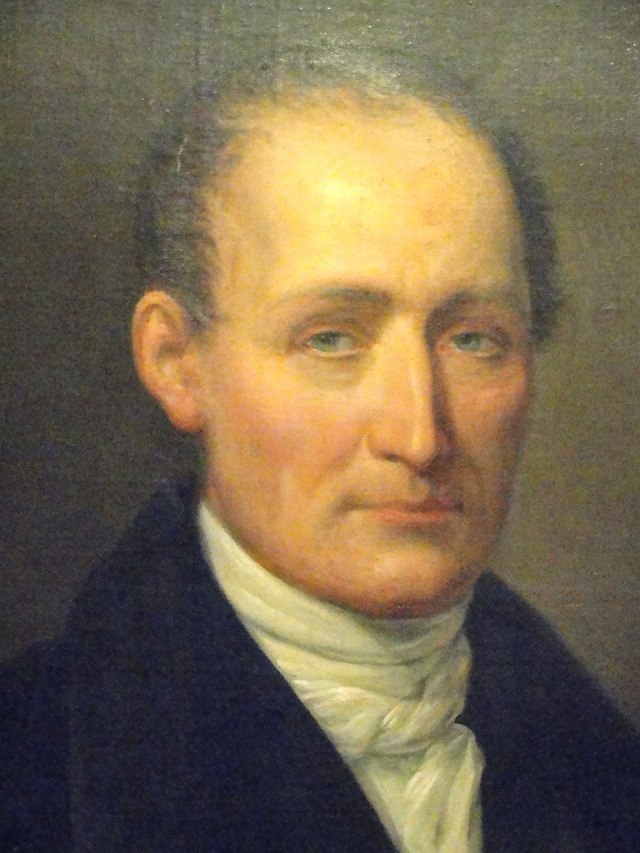
In 1826 or 1827, Joseph Nicéphore Niépce (1765–1833) created the first photograph that still exists today. The image shows the view from a window of the family estate, Le Gras, in Saint-Loup-de-Varennes, France. Exposure likely took more than eight hours — perhaps up to a full day — rendering rooftops, light, and shadows in a grainy, almost abstract composition.
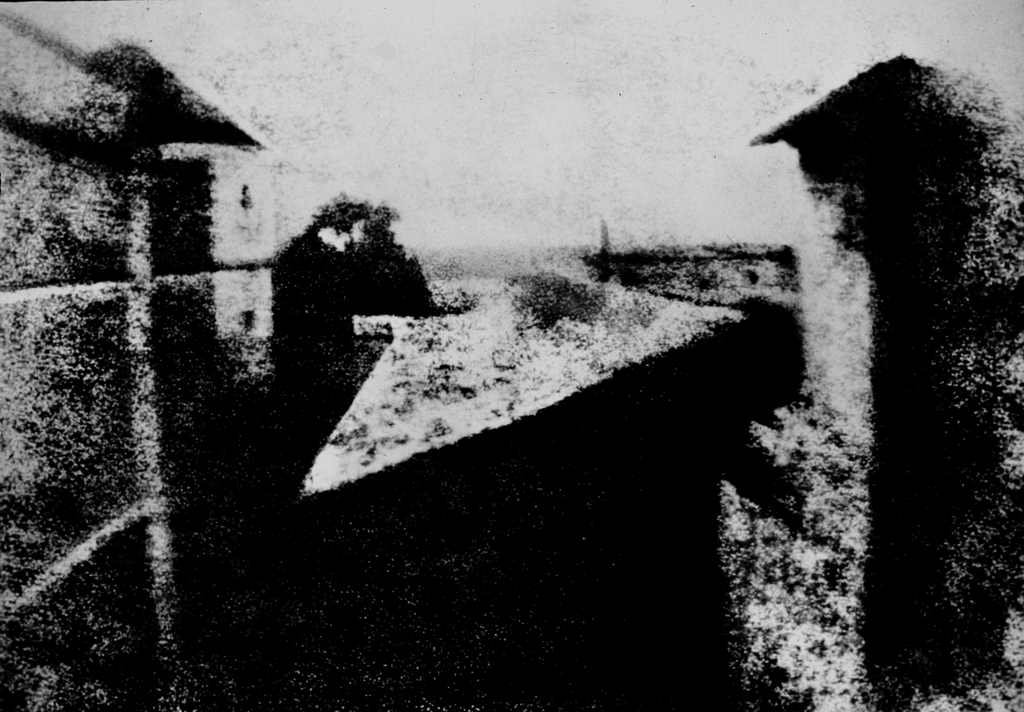
Niépce experimented with a technique he called heliography, in which light reacted with bitumen (asphalt) on a metal plate. The result was revolutionary, though it required further refinement.
From stage designer to photography pioneer

Niépce partnered with fellow Frenchman Louis Daguerre (1787–1851), originally a theater painter and set designer, to refine the technique. After Niépce’s death, Daguerre advanced the process and, in 1839, introduced the daguerreotype — a method in which a silver-coated copper plate was exposed and developed using mercury vapor.
This dramatically reduced exposure time from several hours to just minutes, making it possible to capture sharp, detailed images. Daguerre’s invention was announced publicly on August 19, 1839 — the year considered the birth of photography.
Niépce’s groundbreaking Le Gras image became known to the world in the 1950s and is now housed at the Harry Ransom Center at the University of Texas, Austin. Both pioneers have craters on the Moon named after them — a fitting tribute to two men who captured light.
The Le Gras image also appears on Life magazine’s list of 100 photographs that changed the world, alongside other historic images such as Earthrise (1968), Nagasaki (1945), and Tiananmen Square (1989).
The first photograph to show a person
Louis Daguerre’s 1838 image of Boulevard du Temple in Paris shows a busy street. Due to the long exposure time (7–10 minutes), moving objects disappeared. Yet in the lower right corner, almost by chance, a man having his shoes shined stood still long enough to be captured — becoming the first person ever photographed.

The world’s first selfie
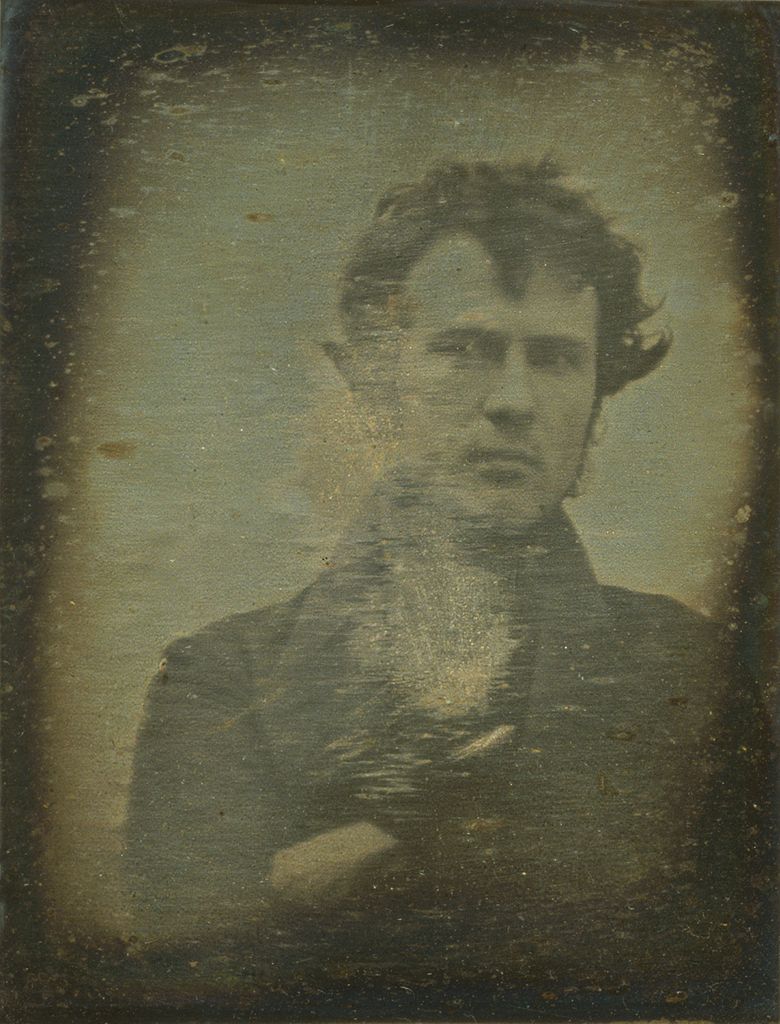
In 1839, American amateur photographer Robert Cornelius (1809–1893) took the first known photographic portrait. It was a self-portrait, requiring him to sit still for 10–15 minutes while the photo was exposed. On the back of the plate, he wrote: “The first light picture ever taken.” Today, we might call it the world’s first selfie.
The world’s first color photograph
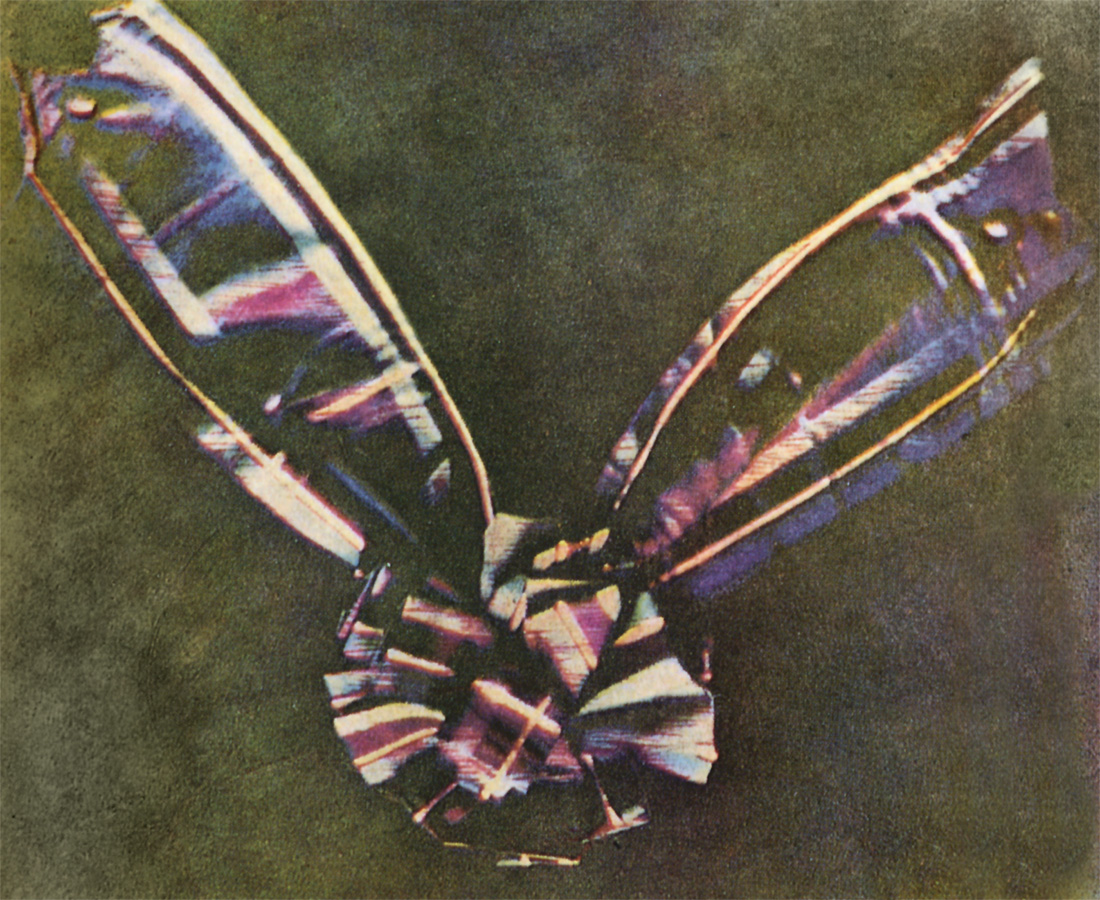
In 1861, Scottish physicist James Clerk Maxwell presented what is considered the first permanent color photograph. The image shows a simple checkered ribbon and was created using three separate black-and-white photos taken through red, green, and blue filters. By projecting these images together, Maxwell demonstrated how colors could be reproduced photographically — long before color film became commercially available.
The photograph itself was taken by Thomas Sutton, who also invented the world’s first single-lens reflex camera.
The first mobile photo: a newborn moment
On June 11, 1997, Philippe Kahn took the first photograph ever uploaded and shared directly from a mobile device. It was a photo of his newborn daughter, Sophie. He linked a digital camera, a laptop, and a mobile phone — launching a new era where photos could be shared in real time. Today, this happens billions of times every day.

AI meets Niépce
Today, we use artificial intelligence to create images that never existed — and to reconstruct and understand photographic moments from the past. The image below, generated by ChatGPT, is an interpretation of Niépce’s iconic view — imagined as it might look with today’s technology.

From copper plates to camera phones
From the digital interpretation above, we can trace the technological journey that brought us to today:
- 1861: The first permanent color photograph is publicly displayed.
- 1888: Kodak launches the first camera for the general public.
- 1935: Kodachrome introduces color film.
- 1960s: Polaroid brings instant photography.
- 1990s: Digital cameras begin replacing film.
- 2000s: Mobile cameras become ubiquitous.
- Today: AI-generated images and 3D photography redefine what a photograph can be.
Where Niépce needed eight hours and metal plates 200 years ago, today we need just a moment and a smartphone. But the essence remains the same: capturing light and freezing a moment in time.
What’s your favorite photography moment? Share it in the comments below!
(This article, originally in Norwegian, was written and edited in collaboration with ChatGPT.)
Photo: Louis Daguerre (1838)
 Z for short.

One thought on “From Niépce to the mobile camera: a journey through photography’s first images”