Text: Solveig Hansen, 2022
Edgar Allan Poe, his life, his work, and his rivalry with Rufus Griswold: a surprisingly entertaining research rabbit hole.
I stumbled upon the legendary feud between Edgar Allan Poe and Rufus Griswold — and I was hooked. Until then, all I knew about Poe was that he wrote spooky stories and was the man behind The Raven. But diving into his work and tumultuous life turned out to be a fascinating and unexpectedly fun experience. The highlight? Christopher Lee’s dramatic reading of The Raven — don’t miss the video at the end of this post.
Among Poe’s horror stories, The Tell-Tale Heart quickly became a favorite. In it, the narrator — who also happens to be a murderer — tries desperately to convince us of his sanity, even as he hides his dismembered victim beneath the floorboards. He insists:
“If still you think me mad, you will think so no longer when I describe the wise precautions I took for the concealment of the body…”
But then he begins to hear the dead man’s heart beating from under the floor, louder and Louder and LOUDER. Thump! Thump! Thump!
Actor James Mason lends the perfect voice to this descent into madness in a chilling 1953 animated adaptation:
Another favorite is The Murders in the Rue Morgue, which introduces Poe’s brilliant detective C. Auguste Dupin, whose sharp deductive mind solves a series of grisly murders. The tale is narrated by his friend — sound familiar? Holmes and Watson, Poirot and Hastings, right? Long before Sir Arthur Conan Doyle and Agatha Christie gave us their iconic detective duos, Poe had already laid the groundwork with Dupin.
Both Doyle and Christie give a nod to Poe.
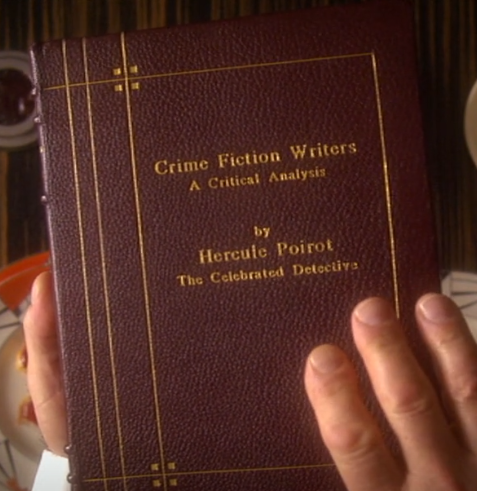
Christie’s Third Girl opens with Poirot having completed his magnum opus — an analysis of the great writers of detective fiction. “He had dared to speak scathingly of Edgar Allan Poe.”
In Doyle’s A Study in Scarlet, Dr. Watson compares Holmes to Dupin:
“You remind me of Edgar Allan Poe’s Dupin. I had no idea that such individuals did exist outside of stories.”
Holmes is unimpressed:
“He had some analytical genius, no doubt; but he was by no means such a phenomenon as Poe appeared to imagine.”
Doyle later clarified that it was Holmes, not himself, who dismissed Dupin.
Poe vs. Griswold
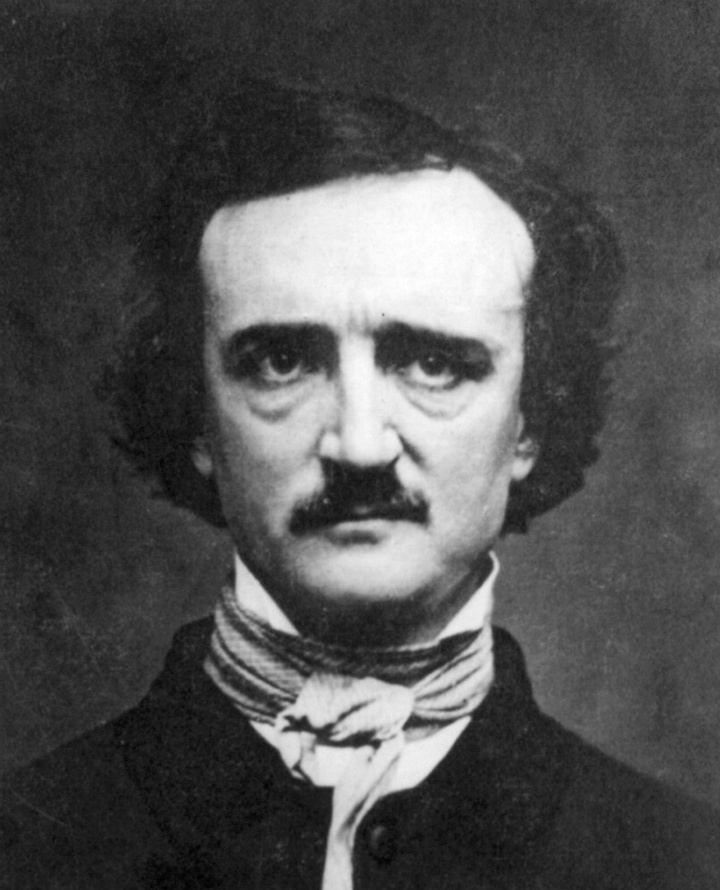

Enter Rufus Griswold — editor, critic, and Poe’s notorious rival. Their feud reads like a Poe story in itself: dramatic, twisted, and impossible to ignore.
When Griswold was compiling The Poets and Poetry of America, Poe submitted several poems. Only three were included. Griswold even paid Poe to review the anthology — but Poe didn’t deliver the glowing praise Griswold expected. Instead, he criticized Griswold’s choices, igniting a literary rivalry.
Tensions escalated when Griswold succeeded Poe as editor of Graham’s Magazine — at a higher salary. Poe retaliated with public lectures mocking Griswold.
Then came Poe’s death. Griswold penned a venomous obituary under the pseudonym “Ludwig,” opening with:
“Edgar Allan Poe is dead. He died in Baltimore the day before yesterday. This announcement will startle many, but few will be grieved by it.”
Unbelievably, Griswold managed to become Poe’s literary executor. He then wrote a damaging biographical sketch filled with lies and half-truths, painting Poe as a mad, drunken misanthrope. That skewed image stuck for decades.
As The Poe Museum puts it:
“Griswold’s distorted image of Poe created the Poe legend that lives to this day while Griswold is only remembered (if at all) as Poe’s first biographer.”
Who says literary research is boring?
Even Comedy Central’s Drunk History team couldn’t resist dramatizing this bizarre feud. Their hilarious retelling — complete with a sloshed narrator and costumed re-enactments — captures the absurdity of it all:
And finally: Christopher Lee reads The Raven
A must-watch. Poe’s haunting poem, read by a master of gothic storytelling.
 Z for short.